
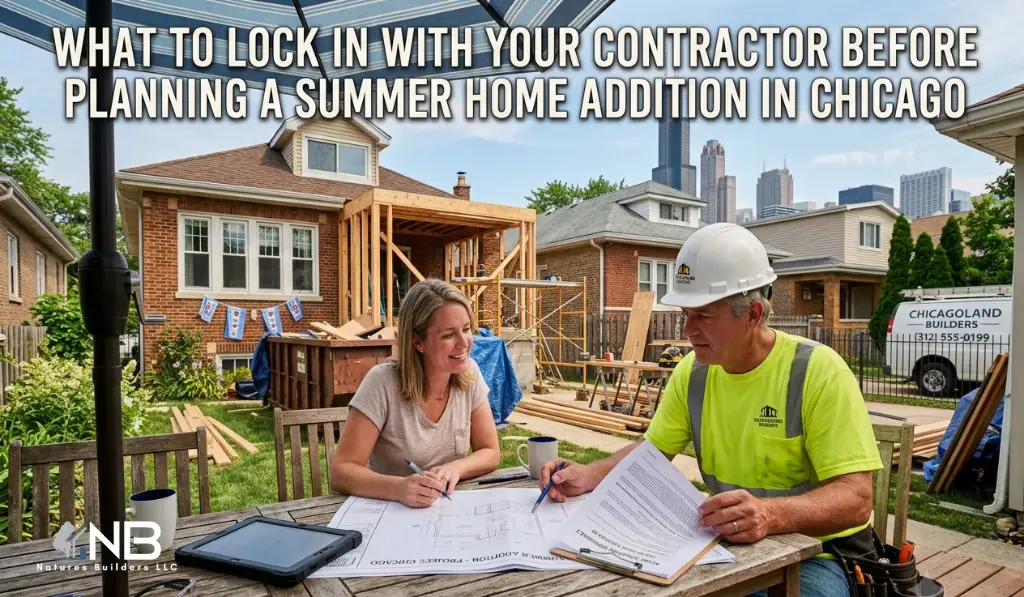
July is here, and for a lot of Chicago homeowners, that means finally pulling the trigger on the addition they’ve been drawing on napkins since February. The weather cooperates, school’s out so disruption to the daily routine is lower, and there’s a real window to get structural work done before fall shifts everything around again.
But here’s what a lot of people don’t realize until they’re already mid-project: the conversations you have before a single wall opens up matter more than anything that happens after. The homeowners who end up frustrated halfway through a home addition almost always trace it back to something that wasn’t nailed down at the start, a vague scope, a missing permit conversation, a budget that didn’t account for what Chicago construction actually costs.
If you’re planning to work with home addition contractors in Chicago this,, this guide covers exactly what needs to be locked in before anything starts.
Why Summer Is Both a Good and Tricky Time to Start
Summer seems obvious for construction better weather, longer days, more flexibility. And it is genuinely a good time for structural work, foundation work, and exterior additions. But it’s also peak season for contractors, which means:
- Availability fills up fast, the good contractors are booked weeks out
- Material lead times stretch in busy seasons
- If you start late in the summer, you risk hitting fall weather before the exterior is sealed
If you haven’t started conversations with a contractor yet, do it now. Waiting until August means waiting until fall for most serious jobs.
The Conversations You Need to Have Before Anything Starts
1. Scope of Work
Vague scopes produce vague results and messy change orders. Before signing anything, the scope should answer:
- What exactly is being added? (Room, floor, garage conversion, rear extension)
- What’s the square footage?
- What finishes are included and to what level?
- What’s in scope and what’s explicitly out of scope?
- Are HVAC, electrical, and plumbing extensions included, or separate?
Every item on that list needs a clear answer in writing before work starts.
2. Permits: Non-Negotiable in Chicago
Any room addition in Chicago, IL that involves structural work, electrical, or plumbing requires permits through the City of Chicago’s Department of Buildings. This isn’t optional, and any contractor suggesting otherwise is someone you should walk away from.
What typically requires permits:
- Structural additions (any new walls, foundation work, framing)
- Electrical work beyond simple fixture swaps
- Plumbing extensions
- HVAC changes or extensions
- Any change to square footage classification
Permits protect you at resale, protect your insurance, and protect the structural integrity of the work itself. Your contractor should pull permits as a standard part of the process — not as an add-on you have to request.
3.Timeline
Chicago summers are good for construction, but timelines slip. Before signing, your contractor should give you:
- A project start date (confirmed, not estimated)
- A projected completion date with clear milestones
- What happens if permit processing delays the start
- How weather delays are handled
A contractor who can’t give you milestone-based timelines is working without a real schedule, and that tends to show up in the middle of your project.
4.House Addition Cost in Chicago
House addition cost in Chicago, Illinois varies significantly based on scope, finish level, and what’s found once work starts. Here’s a realistic breakdown:
Addition Type | Estimated Cost Range |
Single room addition (basic) | $40,000 – $80,000 |
Bedroom addition with bathroom | $80,000 – $150,000 |
Second story addition | $150,000 – $350,000+ |
Garage conversion to living space | $30,000 – $70,000 |
Rear home extension | $60,000 – $180,000 |
These are Chicago-market ranges. Labor costs here run higher than national averages due to union standards, and older homes often come with surprises once walls open, outdated electrical, unexpected structural issues, lead paint or asbestos remediation requirements.
Always ask for:
- An itemized quote, not just a total
- A contingency line in the budget (15–20% is reasonable for Chicago older-home projects)
- What change orders look like, how they’re triggered, priced, and approved
5. Contract Terms: What Actually Protects You
A handshake deal is fine for some things. A home addition in Chicago is not one of them. The contract should include:
- Full scope of work, written in detail
- Payment schedule tied to milestones, not calendar dates
- What happens if costs increase beyond the estimate
- Lien waiver provisions, protects you if subcontractors aren’t paid
- Warranty on labor and materials
- Termination clause for both sides
If a contractor presents a two-page contract for a six-figure project, that’s a problem. Contracts should be thorough.

Planning a Home Addition This Summer?
Start with expert guidance to keep your project on time and on budget.
Types of Home Additions Chicago Homeowners Are Doing This Year
Not sure what kind of addition makes sense for your home? Here’s what home expansion contractors in Chicago are seeing most often:
Rear extensions:
The most common addition in bungalows and two-flat neighborhoods are extension and Kitchen Remodeling in Chicago IL , adds a family room, or creates a larger primary suite at the back of the home.
Vertical additions (second story):
Common in areas where lot size limits horizontal expansion. Adds full square footage without touching the footprint.
Garage conversions:
Detached garages converted to ADUs (accessory dwelling units), home offices, or guest spaces. A growing option in Chicago neighborhoods where rental income matters.
Bump-out additions:
Smaller-scale extensions, typically one room without touching the full structure. Lower cost, faster timeline, still requires permits.
In-law suite or basement conversion:
Not technically a new addition in the traditional sense, but adding a self-contained living space for extended family is one of the most requested projects right now.
Adding a Room to Your House in Chicago: What Affects the Final Cost
When contractors quote adding a room to a house in Chicago, the number that comes back depends on several things that aren’t always visible at the first meeting:
- Soil and foundation conditions — Chicago’s clay soil can require additional foundation work
- Age of the home — pre-1960 homes regularly reveal outdated systems during construction
- Zoning restrictions — setback requirements and FAR (floor area ratio) limits affect what’s possible on a given lot
- Utility extensions — running electrical, HVAC, and plumbing to a new space adds cost beyond the Bathroom Remodeling construction itself
- Finish level — the difference between standard and high-end finishes can be $20,000–$50,000 on a midsize addition
None of this is a reason not to do the project, it’s just a reason to plan with accurate numbers, not best-case-scenario ones.
Check for Hidden Issues Before Construction Begins
Many older homes in Chicago can have hidden issues which can only be discovered after gutting sections of a wall. These issues can include moisture damage, aging insulation, and hidden mold. Each of these can affect the cost and duration of a project. To help with these issues, a Mold Inspection Chicago IL should be scheduled prior to the beginning of the construction. This way potential issues can be exposed and dealt with prior to the construction of the walls and frame. By identifying issues earlier, the chances of incurring a delay with your renovation project goes down significantly.
What to Look for When Hiring Home Addition Contractors in Chicago
Beyond the contract and quote, here’s how to evaluate the Home Remodeling Contractors Chicago themselves:
- In-house crews vs. heavy subcontracting — firms that own their labor have more control over quality and schedule
- Chicago-specific experience — local building code knowledge, permit familiarity, and experience with Chicago’s housing stock specifically
- References from similar projects — ask for contacts from completed additions, not general remodels
- Communication style — how quickly do they respond before you’re a client? That tells you something about during
- Licensed and insured — verify this directly, don’t take their word for it
- Realistic timelines — a contractor who promises an aggressive timeline is either very good or setting you up for disappointment
How a Home Addition Affects Property Taxes in Chicago
This comes up late in most planning conversations, but it’s worth knowing upfront. A home addition that increases your home’s assessed value will eventually be reflected in your Cook County property tax assessment. The increase isn’t immediate, assessment cycles mean it typically shows up one to two years after the project completes but it should be factored into the long-term cost of the project.
Consult a real estate attorney or tax professional if the specific impact matters to your financial planning.
Planning for Long-Term Living Needs
Are you adding space to your home to account for needs you currently have, or needs that you anticipate having in the future? New space could add a first floor bedroom or bathroom, or it could add an in-law suite. Consider how your addition will address the needs of your family in the future. If you expect this addition to be used by aging family members or expect it to be more accessible, then a Home Health Evaluation will address your needs. This evaluation will offer suggestions to prioritize comfort and safety for family members and to increase day-to-day function within the space after it is complete.
FAQs
How do I find a contractor for a home addition in Chicago?
Begin with recommendations from people who have completed similar projects in the area. Get Chicago-specific references, examine insurance and licensing independently and obtain at least two or three quotes in detail before making a final decision.
What types of home additions are most common in Chicago?
Second-story extensions, rear extensions bump-outs to garages, and in-law suite additions are all standard. The best type of home depends on the size of your lot as well as the zoning and budget and what you really want out of the available space.
How much does a home addition cost in Chicago?
Basic single-room additions start around $40,000. Bedroom additions with bathrooms typically run $80,000 to $150,000. Second-story additions can reach $350,000 or more. Final costs depend heavily on scope, finish level, and what’s discovered once construction begins.
Do I need a permit for a home addition in Chicago?
Yes you can, for any electrical, structural, or plumbing work that is involved. The Chicago City’s Department of Buildings requires permits for all new additions that impact the square footage of the building or involve mechanical systems. A reliable contractor manages permits as part of the overall project.
How long does a home addition take to complete in Chicago?
Simple additions typically take two to four months. More complicated additions that involve structural changes, a second story or major mechanical work can take between four and eight months or more. The processing time for permits adds to these timeframes.
What should I look for when hiring a home addition contractor in Chicago?
In-house workers specifically for Chicago, in-house labor experience verified references from additions that have been completed, clearly written contracts, appropriate insurance and licensing and a style of communication which suggests they’ll keep you informed all the time.
How does a home addition affect property taxes in Chicago?
Any addition that raises assessed value could eventually add to you Cook County property tax bill generally appearing in assessments between one and two years after the completion. The exact effect will depend on the amount that was added and how long the assessment period is in effect.
Start the Conversation Before the Summer Fills Up
Natures Builders LLC works with Chicago homeowners on residential additions from initial planning through final walkthrough with in-house crews, transparent project management, and the kind of straightforward communication that makes a six-month project liveable. If you’re looking for home addition contractors in Chicago who give you real answers before anything starts, reach out now while summer availability still exists.
📞 Contact Natures Builders LLC today to schedule a consultation and get a detailed project estimate. Call us at (708) 719-2740 or email us at Info@naturesbuilders.com